Increased Productivity
Extended oil change intervals means more time cutting.
CO2 Emissions reduction without operational limitations
Decision-makers in the public and private green sector are under significant pressure to meet the 2030 climate targets. The call for an emission-free fleet is strong, but in practice it requires an honest conversation about the ‘productivity gap’.
Full electrification is often presented as the only way forward. However, for heavy- duty and long-duration mowing, this technology currently faces clear limitations. Investment costs are often double those of conventional machines, while limited battery capacity and required charging times can halve daily operational productivity. Add to that the complexity of grid upgrades and charging infrastructure, and the transition risks stalling before it becomes operationally viable.
This creates a paradox: waiting for the ‘ideal’ battery technology means losing valuable years of CO2 reduction.
HVO100 breaks this deadlock. It provides a drop-in solution that delivers up to 90% CO2 reduction with the fleet you already operate. It enables you to make an immediate strategic impact and win tenders, without compromising productivity, budget, or operational continuity.

HVO100, or Hydrotreated Vegetable Oil, is a 100% renewable, fossil-free diesel alternative made from waste and residue materials such as used cooking oil. Through a unique hydrotreating process, these certified feedstocks are converted into a clean-burning, efficient fuel that is fully compatible with certified diesel engines – including the powerful engines in our Ferris mowers.
Reduce your emissions by up to 90% on a well-to-wheel* basis. This significantly lowers your CO2 footprint across the entire fuel lifecycle.
HVO100 is a drop-in solution for Ferris diesel mowers, meaning no modifications or upgrades to the engine are required. It offers a significantly lower investment compared to electric infrastructure. You can implement a sustainable fuel strategy immediately, without technical barriers, while meeting the EN 15940 standard for paraffinic diesel.
The removal of oxygen during the refining process results in a chemically pure fuel, free from biomass components. With up to 30% less particulate matter and lower nitrogen oxide (NOx) emissions, HVO100 not only supports environmental goals but also creates a cleaner working environment, thanks to near odourless combustion.
HVO100 performs reliably in low temperatures and ensures consistent starting down to -22°C. Its stability over time also makes it suitable for long-term storage.
Lower operating weight helps prevent soil compaction and turf damage, offering a clear advantage over heavier battery-electric alternatives.
1. From a green foundation...
Plants absorb CO2 (carbon dioxide) from the air through photosynthesis; including harmful CO2emissions. A win for the environment!
2. via a natural food-based product...
The raw materials from these plants can be used to produce cooking oils, such as sunflower oil. A win for people!
3. and recycling at its most efficient...
The waste and residue from these oils are processed through a method known as hydro treatment, transforming them into a revolutionary, plant-based fuel: HVO. A win for mobility!
4. to a truly clean diesel alternative!
HVO, or Hydrotreated Vegetable Oil, has the same properties as conventional diesel, but burns significantly cleaner. A win for the environment, people, and mobility!

Extended oil change intervals means more time cutting.
60% savings per season, per unit*.
Keeps the oil and engine cooler.
Ensures off-angle lubrication and minimizes thermal breakdown of oil.
Sustainability is only viable when it makes economic sense. Switching to HVO100 is not an expense, but a strategic allocation of capital that delivers maximum CO2 reduction at a fraction of the cost of alternative technologies.
In the professional green sector, the cost efficiency of your chosen emissions reduction strategy is critical. A comparison between HVO100 and battery-electric solutions highlights a significant difference in the investment required per unit of emissions saved.
This means that, with the same budget, HVO100 can deliver nearly eight times more CO2 reduction compared to switching to electric equipment.*
* Figures: Tool-Fuel Services GmbH, Hamburg
![]() |
|
![]() |
|
HVO100 Approx. € 98 per tonne saved |
Battery-electric Approx. € 776 per tonne saved |

Total Cost of Ownership (TCO) in electrification is often negatively impacted by the so-called productivity gap.
A business case analysis highlights why HVO100 protects fleet profitability:
No capital-intensive investment in new machines or complex charging infrastructure is required. Your existing diesel fleet remains commercially viable.
No loss of operational hours due to charging times or limited battery capacity. HVO100 delivers a 100% duty cycle: you can mow all day, regardless of workload.
Avoid hidden costs such as grid upgrades or the need for on-site mobile charging solutions.
Our patented suspension technology delivers exceptional productivity and ride comfort, while HVO100 acts as a catalyst for immediate emissions reduction. The synergy between Ferris diesel mowers and HVO100 creates a strong foundation for future-ready green management. Optimal alignment between machine and fuel is essential. The ultra-clean combustion of HVO100 protects critical engine components and reduces soot build-up. Ferris acts as your strategic knowledge partner, bridging the gap between advanced machinery and the complex landscape of sustainable fuel standards (EN 15940).
Through our in-depth expertise, we help you understand how technology and sustainability come together in practice, ensuring your organisation stays ahead in a market with increasingly strict demands on emissions and accountability.
Discover the power of Ferris' top mowers designed to deliver outstanding performance while running on HVO100. Both the IS® 6200 Diesel Zero Turn Mower and the IS® 2600 Diesel Zero Turn Mower are fully compatible with HVO100 fuel, providing you with a sustainable, high-powered solution for all your landscaping needs..

Engine Power: 23.9 HP
Cutting Width: 132 / 155 cm
Productivity: up to 2,23 ha/h
Suspension: IS®
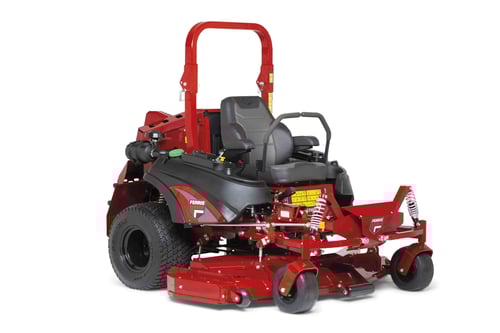
Engine Power: 48.3 HP
Cutting Width: 183 cm
Productivity: up to 2,93 ha/h
Suspension: IS®

"At Hilaire Van der Haeghe N.V., we deliberately choose to run our diesel machines on HVO, both in our demo fleet and when delivering to our dealers. It is a simple switch with a clear impact: lower CO2 emissions, cleaner combustion, and a more comfortable working environment for the operator. At the same time, performance and reliability remain at the level we expect. For us, HVO is a logical step towards more sustainable operations, without compromise."
“Electrification is often seen as the solution for emissions reduction, but in practice there are multiple routes to the same goal. With HVO100, green professionals can significantly reduce their CO2 emissions today, without changing their workflow or replacing their existing fleet.”
HVO100 is supplied by reputable EU fuel providers with full traceability documentation in line with ISCC (International Sustainability & Carbon Certification) and the European RED II Directive. Each delivery is accompanied by a Proof of Sustainability (PoS), certifying its origin from 100% waste streams and the exact CO2 reduction achieved.
This certification process eliminates any risk of greenwashing. You receive the documented evidence required to comply with CSR and ESG reporting standards, as well as the CO2 Performance Ladder certification. With HVO100, you choose a fuel supply chain that is fully audited from source to tank by independent bodies such as SGS, ensuring maximum integrity.
HVO100 is now a proven standard. As international rail networks scale up their sustainability efforts and airports transition their ground fleets to low-emission operations, the fuel continues to demonstrate its value in heavy duty road transport. Brands such as Coca-Cola and retailers like Action have already adopted HVO100 across their logistics operations. Royal Mail in the UK also uses it across its diesel fleet. Choose the fuel that has already proven itself across millions of operating hours in the most demanding sectors.

Switching to HVO100 does not require costly investment in new infrastructure or charging stations. As a drop-in replacement fuel, it integrates seamlessly into your existing operations through three proven scenarios that ensure operational continuity. With this level of flexibility, you ensure a smooth transition without the logistical challenges associated with alternative energy sources.
By installing your own HVO tank on-site, you benefit from competitive bulk pricing while maintaining full control over fuel management.
You can rely on a growing network of fuel stations and suppliers offering HVO100.
HVO100 can be safely mixed with fossil diesel, with no adverse effects on engine performance, reducing the risk of downtime. Even if HVO100 is temporarily unavailable locally, standard diesel can be refuelled without any impact on engine performance.
At Ferris, we understand that sustainability goes beyond simply choosing a different fuel. It is a strategic shift that requires informed decisions and measurable results. We are not just a machine supplier, but your partner throughout this transition.
Our team supports you with complex procurement challenges, provides the exact data required for your tenders, and helps you calculate your actual CO2 savings. Together, we enable a sustainable fleet without compromising operational performance.
Download the HVO100 brochure
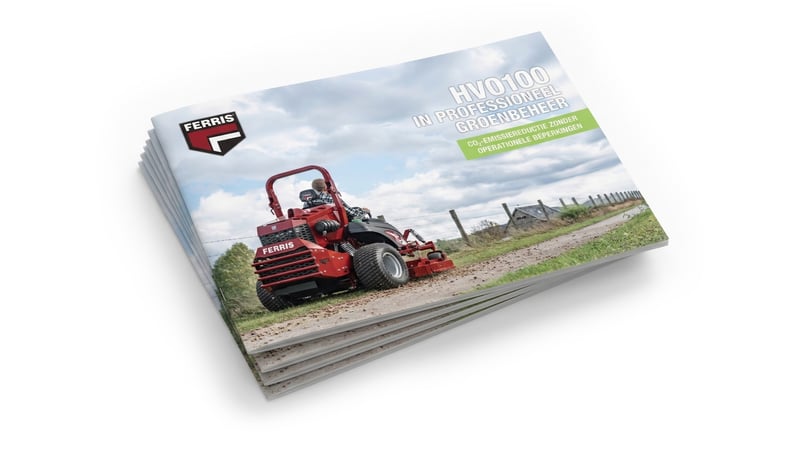
For convenience we put all HVO100 information in a comprehensie PDF document that is easy to share with your prospects.
Yes, HVO100 from reputable European producers is certified for sustainability by trusted organisations like ISCC and SGS. These certifications ensure it’s made from waste materials and meets strict environmental standards. The entire emission journey, from sourcing to delivery to the engine, is traceable.
Not all HVO100 is created equal, but Ferris makes sure to support only sustainable options. We back palm oil-free HVO100, made from waste oils and residues, so you can feel good knowing it doesn’t harm forests or compete with food crops. Trusted producers, like Neste, are certified by organisations like ISCC, so their fuel is fully traceable and eco-friendly.
HVO100 meets some of the most stringent European fuel standards, ensuring its quality, sustainability, and compatibility.
It conforms to EN 15940*, the European standard for paraffinic diesel fuels, as well as EN 590, the widely recognised European diesel specification. These standards guarantee that HVO100 is a high-quality drop-in alternative to traditional diesel.
It also complies with the EU Fuel Quality Directive 98/70/EC, which enforces strict environmental and fuel quality regulations across Europe. But it’s not just Europe that has recognised the benefits of HVO100, this fuel also aligns with the U.S. diesel standard ASTM D975.
Not necessarily. While all HVO100 fuels meet the EN 15940 standard, emissions reductions can vary depending on the feedstock used by different producers. Leading producers, such as Neste, offer HVO100 that achieves up to 90% CO₂ reduction, whereas other formulations may have a lower impact. It's important to source certified, high-quality HVO100 to ensure you get the maximum environmental benefits.
Switching to HVO100 has a positive impact on local air quality. It can reduce fine particle emissions by up to 33%, nitrogen oxides (NOx) by 9%, hydrocarbons by 30%, carbon monoxide by 24%, and polyaromatic hydrocarbons (PAH). These reductions mean less smog and cleaner air for operators and the communities where they work.
At the point of combustion, HVO100 emits a similar amount of CO₂ per litre as fossil diesel because both fuels consist of hydrocarbons. However, the key difference lies in where that CO₂ comes from.
The CO₂ which is released when burning fossil diesel comes from carbon stored underground for millions of years, this adds new emissions to the atmosphere.
In contrast, HVO100 is made from renewable raw materials, like used cooking oils and animal fats, which previously absorbed CO₂ from the atmosphere as part of their natural growth cycle. Because of this, HVO100 does not contribute additional CO₂ emissions beyond what was already in circulation.
No, using HVO100 will not affect your Ferris mower's warranty. The Zero Turn diesel mowers from Ferris are officially approved to run on HVO100 without any modifications.
Both Yanmar and Caterpillar, the engine manufacturers for Ferris diesel mowers, fully approve the use of HVO100 in their engines. They continue to honour the full engine warranty when you choose to use HVO100 and fully support its application in their engines.
This means that you can switch to this renewable fuel confidently, knowing it has no impact on the warranty or performance standards.
Yes, HVO100 burns cleaner than traditional diesel, which can reduce carbon build-up in the engine. This helps extend engine life and may lower maintenance needs over time.
Switching to HVO100 requires no upfront investment. It works seamlessly in a standard Ferris diesel mower without modifications. This means you can start reducing emissions immediately, without the need for costly equipment upgrades or infrastructure changes.
So, while HVO100 may be slightly more expensive than standard diesel, depending on your location, it delivers long-term benefits that can offset this cost difference. Cleaner combustion leads to reduced maintenance, longer engine life, and significant environmental benefits. Many operators find that these advantages make HVO100 a worthwhile investment in sustainability.
Yes, HVO100 is well-suited for cold weather. Unlike some biodiesel alternatives, HVO100 has excellent cold flow properties and remains effective at temperatures as low as -34 °C. This stability ensures that your Ferris mower will start reliably and operate smoothly, even in cold conditions.
Yes you can! Book a demo and experience the future of sustainable mowing first-hand. Discover how easy it is to transition to a renewable fuel that delivers the same power and performance you expect from Ferris mowers but with a fraction of the carbon footprint.
Our team is here to show you the future of environmentally friendly landscaping and answer any questions you have along the way.
Yes! At Ferris, we are committed to providing sustainable solutions for today and the future.
We understand the increasing pressure our customers face, particularly from tenders, to lower emissions. HVO100 provides a seamless, eco-friendly solution for businesses that need reliable, high-performance machines right now.
As a drop-in fuel, it works seamlessly in diesel-powered Ferris mowers, cutting CO₂ emissions without compromising performance or requiring new equipment. Made from renewable waste oils and residues, HVO100 helps businesses meet sustainability goals without disrupting operations or making current equipment obsolete.
But we’re also looking ahead. We continue to develop new technologies and mowers that meet both our high performance standards, evolving environmental demands and our customers’ business needs.
Most standard diesel CO₂ figures only account for emissions at the point of combustion (2.606 kg CO₂ per litre). However, this doesn’t include the emissions from extraction, refining, and transportation of diesel, which add an additional 640 g CO₂ per litre.
To fairly compare HVO100 and diesel, you need to use the well-to-wheel emissions, which take the entire fuel lifecycle into account. That’s why HVO100 achieves up to 90% CO₂ reduction, even though it emits similar CO₂ levels at combustion.
While electric mowers produce zero emissions during use, their overall environmental impact varies depending on the energy grid, which can still rely on fossil fuels like coal in some regions. Additionally, battery production requires rare metals, which come with their own environmental costs.
HVO100 provides a sustainable solution that allows existing diesel mowers to remain in use, delivering up to a 90% reduction in greenhouse gas emissions across its lifecycle; from production to delivery. This means you can retain the power and reliability of a diesel engine, with the added benefit of reduced emissions and no downtime for charging.
HVO100 lets you start reducing emissions right away, meeting the immediate demands of tenders and aligning with your high performance standards. It’s a practical solution for businesses that need reliable, high-performance landscaping equipment, like a Ferris Zero Turn mower, without waiting for battery technology and infrastructure to catch up.
*Standard for Paraffinic Diesel Fuel Specifications
Get in touch for a strategic consultation to see how HVO100 can make a difference!