The New 32-Inch Ferris Z1-P Stand-On Mower: Compact Productivity
Looking for a small commercial-grade stand-on mower? The 32-inch Ferris Z1-P mower helps crews navigate tight gates and spaces with comfort and...
3 min read

Common mower engine oils include SAE 30 for warmer temperatures, SAE 10W-30 for varying temperatures, and Synthetic 15W-50 for many Ferris® mowers. The right choice for your Ferris® mower depends on your engine and operating temperatures.
Picking engine oil doesn’t have to be complicated. The right oil—and the right oil level—helps protect your engine and keep your mower ready for the workday.
Since Ferris® mowers come with different engine brands, start with your engine operator’s manual and your Ferris® operator’s manual to confirm the exact oil requirements and capacity for your machine. The guide below explains the common options and how to check your oil level without overfilling.
 Quick tip: Many Ferris® operator’s manuals are available online. If your mower has a Vanguard or Briggs & Stratton engine, Briggs & Stratton Assist can also help you find engine information. Have your engine model number handy for more specific results.
SAE 30 is a common choice for warmer temperatures, while multigrade oils such as SAE 10W-30 and synthetic SAE 5W-30 cover a wider range of conditions. Your engine manufacturer’s recommendations determine which is right for your mower.
Quick tip: Viscosity describes how easily oil flows, but it doesn’t tell the whole story. Two oils labeled 10W-30 can have different formulations. Oils formulated for air-cooled, four-cycle engines are designed to handle their higher operating temperatures, so don’t assume an automotive oil is right for your mower just because the viscosity matches. Choose an oil that meets your engine manufacturer’s specifications for your application.
Here are a few common viscosity grades you’ll see:
These are general examples, not a single oil recommendation for every Ferris® engine. Briggs & Stratton’s mower oil guide provides guidance for its engines; use your engine manufacturer’s specifications to confirm your selection.
Quick tip: Stick with a high-quality detergent oil that meets the service classification listed by your engine manufacturer (such as SF, SG, SH, SJ or higher). Skip extra additives unless your engine manufacturer specifically recommends them.
If you’d rather not guess, your local Ferris® dealer can help confirm the right oil for your mower—and get you set up with the correct filters and parts.
Yes, synthetic oil can be used in mower engines when it meets the engine manufacturer’s recommended viscosity and service classification. It can offer protection across a wide range of temperatures, including during cold-weather starts.
The important part is choosing the right specification—not simply choosing between conventional and synthetic. Synthetic oil also does not automatically extend your oil-change interval, so keep following your engine’s maintenance schedule.
Oil capacity depends on the engine model, not just whether your mower is a walk-behind, stand-on, or riding mower. Find the specified capacity in your engine owner’s manual; the engine identification label can help you look up the right information.
As a general starting point:
These amounts vary by engine, so treat them as rough reference ranges—not a substitute for your engine’s specified capacity.
If you’re topping off the oil, add a little at a time, let it settle, and recheck the dipstick. You don’t need to add the engine’s full oil capacity when you’re only bringing a low level back into the proper range.
One big rule: Don’t overfill. Too much oil can lead to smoke, leaks, or performance issues. Stop at the proper dipstick level, not when the bottle is empty.
If you’re not sure which engine you have, a Ferris® dealer can help identify it and confirm the correct fill amount.
Check the dipstick with the mower on a level surface and the engine off and cool. The oil should be between the “Add” and “Full” marks—not above “Full.” Follow the safety instructions in your mower and engine manuals before beginning.
Many small engines call for an oil change every season or after a specified number of operating hours. Commercial mower intervals vary by engine and oil system, so use the schedule for your equipment rather than a universal hour limit.
If you mow commercially, work in dusty conditions, or run in extreme heat, check the schedule’s severe-service guidance: those conditions may call for more frequent maintenance. Also check whether a new engine has an initial oil-change requirement.
Your Ferris® and engine manuals provide the exact intervals for your machine. Keep track of operating hours so routine maintenance doesn’t get lost during a busy mowing season.
Your Ferris® dealer is a resource for confirming the right oil and capacity for your exact mower and engine—and helping you stay on track with filters, parts, and routine maintenance.
Find a dealer and have your mower and engine model information ready to get started.
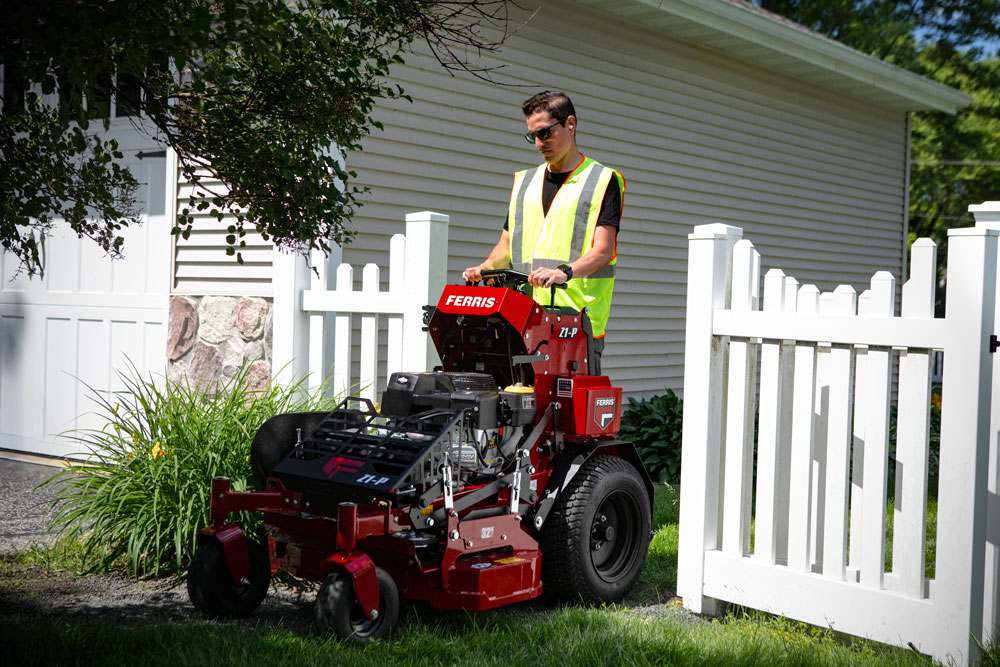
Looking for a small commercial-grade stand-on mower? The 32-inch Ferris Z1-P mower helps crews navigate tight gates and spaces with comfort and...